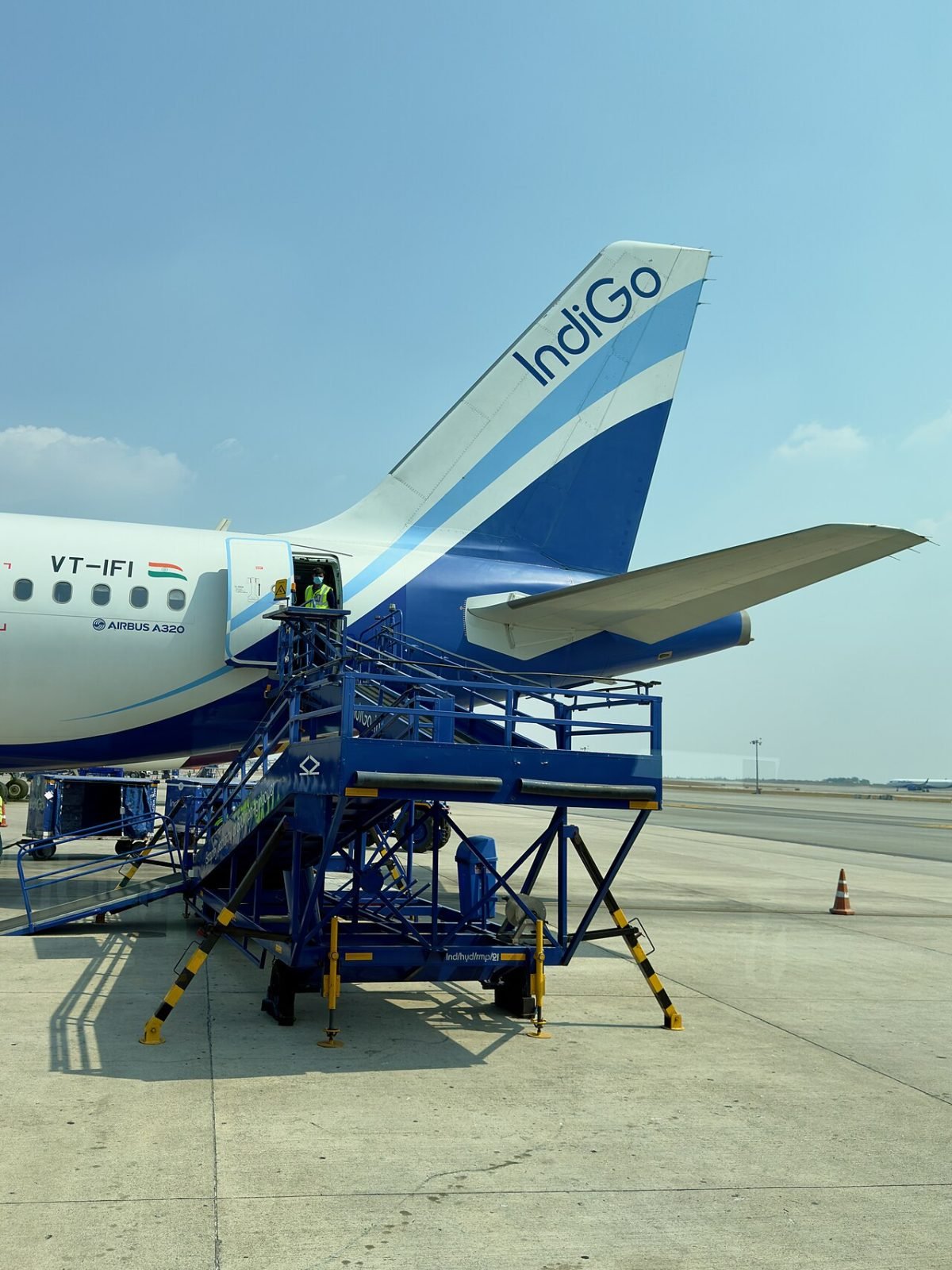
With aviation turbine fuel (ATF) prices spiking sharply due to the West Asia crisis, the Union Cabinet on June 3 approved a Rs 10,000-crore ATF price stabilisation fund to shield Indian airlines from the fuel shock.
New Delhi, June 3. Offering major relief to Indian airlines grappling with a sharp spike in aviation turbine fuel (ATF) prices, the Union Cabinet has approved a one-time Rs 10,000-crore budgetary package to set up an ATF price stabilisation fund. The decision was taken on June 3. The fund is being seen as a sweeping intervention to shield the country's aviation sector from the fuel shock caused by escalating tension in West Asia.
How the fund will work
Under the scheme, the government will provide interest-free advances of up to Rs 10,000 crore to state-run oil marketing companies (OMCs) through the Ministry of Petroleum and Natural Gas. The facility will be available to all willing scheduled Indian airlines operating both domestic and international services. Participating carriers will be able to buy fuel from the OMCs under a fixed-price arrangement for up to three years, subject to annual reviews.
Compensating the oil companies
Under this mechanism, the oil marketing companies will be compensated when international ATF prices rise above a benchmark set by the government. The aim is to ensure that the full burden of sharp price swings does not fall directly on airlines and, ultimately, on passengers. The government believes that stable fuel costs will support airlines' finances and boost air connectivity and tourism.
The backdrop of the crisis
This emergency arrangement comes at a time when the crisis in West Asia has driven a steep jump in jet-fuel prices. According to the data, international ATF prices rose from Rs 60.50 per litre in March 2026 to about Rs 142 per litre in May 2026 — a surge of roughly 135 per cent. Fuel accounts for the single largest share of airlines' operating costs, so a rise this sharp has put serious pressure on their profitability.
Industry reaction
The aviation sector has welcomed the government's move. Industry watchers say sudden fuel-price shocks triggered by geopolitical events are among the biggest risks airlines face, and that the fund will act as a shield against such uncertainty. They believe stable fuel costs will help keep fares relatively steady and allow operations to be planned more effectively.
How ATF prices are set
In India, the price of aviation fuel depends mainly on international crude-oil and jet-fuel prices, the rupee-dollar exchange rate and the value-added tax (VAT) levied by the states. ATF is currently outside the ambit of the goods and services tax (GST), which is why its price varies considerably from one state to another. The aviation industry has long demanded that ATF be brought under GST so that the tax burden eases and prices become more uniform. When global oil prices rise sharply, the effect on airlines' costs is direct and immediate, since fuel is the single largest component of their total operating expenses.
Which airlines get relief
The fund will be available to all major scheduled airlines in the country, including those operating on both domestic and international routes. India's aviation market has grown rapidly in recent years and passenger numbers have reached record levels. In that context, a sudden spike in fuel costs can affect not only airlines' financial health but also fares and air connectivity. The fund's purpose is to absorb this shock and sustain the sector's growth momentum, so that the expansion of air connectivity to smaller cities is not disrupted.
Impact on passengers
Analysts say the indirect benefit of price stability could also reach passengers, as the pressure of sudden cost increases on airlines eases. They also stress, however, that the fund is a temporary and targeted intervention, and that in the long run the competitiveness of the aviation sector will depend on broader factors such as the fuel-tax structure, infrastructure and operational efficiency. Some observers also feel such a subsidy-based arrangement must be implemented in a balanced way so that market competition is not distorted.
What happens next
The government must now spell out detailed implementation guidelines, the method for fixing the benchmark price and the terms of airline participation. The coming months will show how the situation in West Asia evolves and in which direction ATF prices move. If global prices stay high, the fund could prove to be an important support for Indian airlines; if prices soften, it may also be reviewed. Industry bodies are likely to keep pressing, in parallel, for a longer-term structural fix such as bringing ATF under GST, which they argue would reduce price distortions across states and make the sector more resilient to external shocks. The effectiveness of the fund will ultimately be judged by how smoothly it is operationalised and how well it cushions carriers without distorting competition in a fast-growing market.