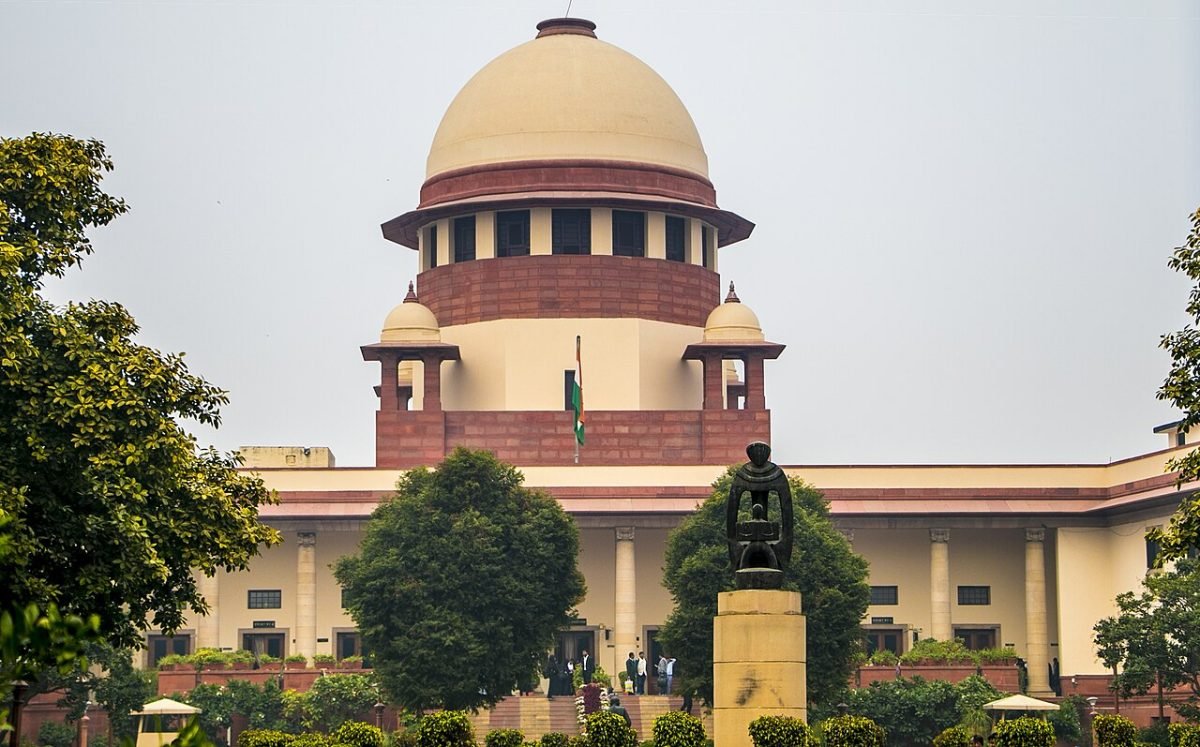
New Delhi, June 11. The country's apex court has delivered a landmark verdict that moves toward giving legal recognition to the contribution of homemakers. In its ruling on June 11, the Supreme Court described homemakers' contribution as that of 'nation builders' and held that when a homemaker dies in a motor-vehicle accident, the loss of domestic care suffered by the family must be included in compensation as a separate and independent head. The court valued that loss at a minimum of Rs 30,000 per month.
The crux of the ruling
The court made clear that the work a homemaker does at home — caring for children and the elderly, preparing meals, managing the household — is in no way less than economic activity. If that work had to be bought in the market, it would carry a definite price. Therefore, when a homemaker loses her life in an accident, the family suffers not only an emotional but also a real economic loss, which compensation must make good. The principle was applied to claims filed under Section 166 of the Motor Vehicles Act, 1988.
Why the verdict matters
In India, crores of women run households without any direct salary, and their labour is often treated as 'invisible' or 'non-economic'. Economists in India and abroad have long argued that the value of unpaid domestic and care work is never recorded in gross domestic product, even though the economy cannot function without it. The Supreme Court's ruling is being seen as a strong step toward giving that unseen contribution both legal and monetary recognition.
Impact on how compensation is calculated
Until now, motor-accident claims tribunals often assumed a very low 'notional income' when fixing compensation for the death of a homemaker, leaving families with smaller awards. With the court's direction, the loss of domestic care will now be added as a distinct head at a minimum rate of Rs 30,000 a month. In practical terms, this means insurance companies and tribunals will have to adopt a fairer and more realistic approach to calculating compensation. Legal experts believe the ruling will affect thousands of pending and future claims across the country.
Another key interpretation
During the same proceedings the court also interpreted another aspect of motor-vehicle law. It held that an injury caused by a roadside tree branch falling on a stationary autorickshaw during heavy rain cannot be treated as an accident arising out of the 'use' of a motor vehicle within the meaning of Section 166 of the Motor Vehicles Act. The interpretation clarified that a direct connection between the 'use of the vehicle' and the accident is essential for a compensation claim.