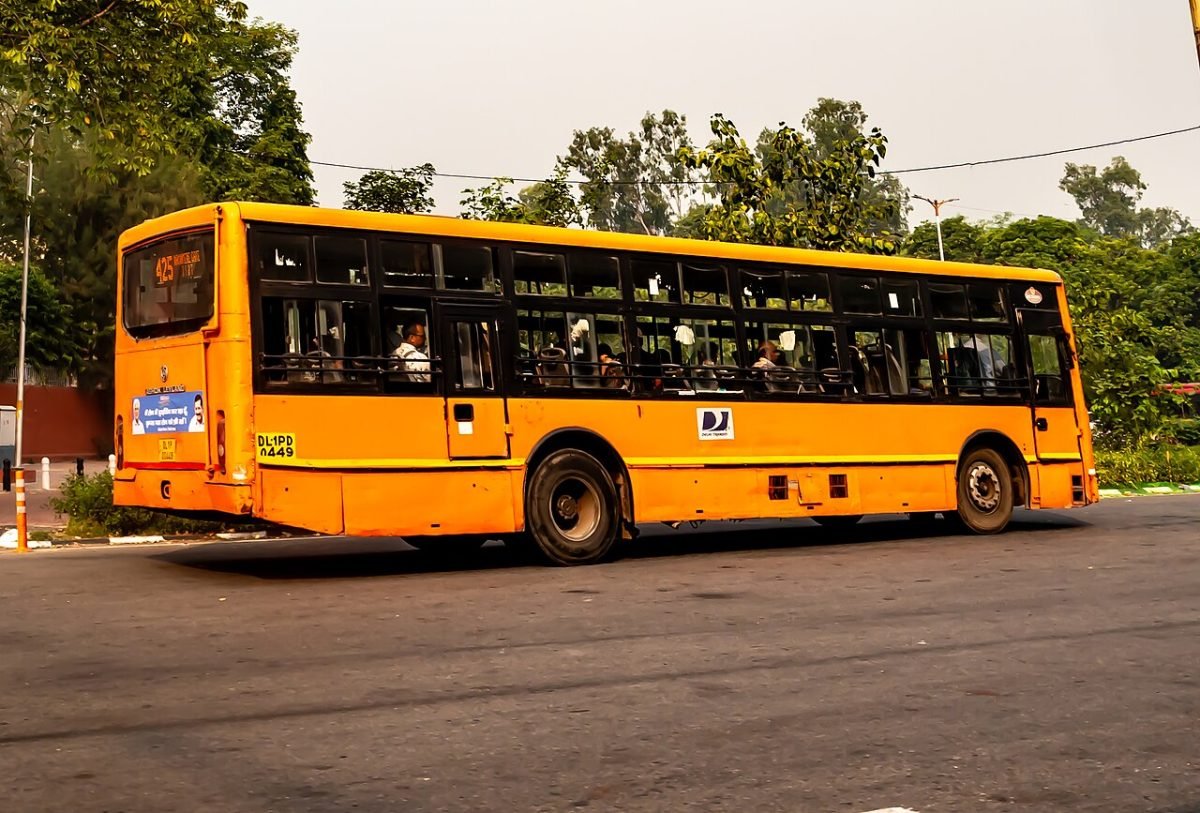
Chaired by PM Narendra Modi, the Union Cabinet on June 3 approved a two-year, Rs 9,585-crore scheme to replace roughly 2.07 lakh BS-IV-or-older trucks and buses across Delhi-NCR with BS-VI or electric vehicles, in a bid to cut the capital region's chronic air pollution.
New Delhi, June 4. In a significant push to tackle the National Capital Region's hazardous air, the central government has approved a major new intervention. The Union Cabinet, chaired by Prime Minister Narendra Modi, on Wednesday, June 3, cleared a two-year, Rs 9,585-crore clean-mobility scheme. The programme aims to phase out older, more-polluting commercial vehicles in Delhi-NCR and replace them with cleaner-fuel and electric alternatives.
What the scheme offers
Under the scheme, owners of trucks and buses meeting BS-IV or earlier emission standards will be given incentives to switch to BS-VI-compliant or electric vehicles. According to government estimates, the programme will benefit about 2.07 lakh vehicle owners across the NCR districts of Delhi, Haryana, Rajasthan and Uttar Pradesh, covering roughly 1.91 lakh trucks and 16,329 buses. The total financial outlay is Rs 9,585 crore, of which Rs 5,041 crore will come from the central government and an estimated Rs 1,601 crore will be in the form of tax concessions extended by the participating states.
Why the scheme was needed
Delhi and its surrounding districts have been gripped by severe air pollution during winter months for more than a decade. Ageing diesel-powered commercial vehicles are counted among the biggest contributors to that pollution. Vehicles in the BS-I, BS-II, BS-III and BS-IV categories emit several times more nitrogen oxides and particulate matter than modern BS-VI vehicles. The government believes that taking these vehicles off the road can deliver a tangible improvement in air quality, while also accelerating the country's broader shift toward sustainable transport.
The government's argument
Official sources say the scheme is not merely an environmental measure but is directly linked to public health, employment and the domestic vehicle industry. By retiring old vehicles and stoking demand for new, cleaner ones, the programme is expected to spur investment and create jobs in automobile manufacturing, batteries and charging infrastructure. In his reaction, the Prime Minister described the decision as a major step toward cleaner, healthier living for the citizens of Delhi-NCR. He said promoting clean mobility was a government priority and that the scheme was part of that resolve.
The role of states and stakeholders
Because the NCR spans four states, the scheme has been structured as a joint central-and-state effort. Transport associations and fleet operators have welcomed the incentives, but some have cautioned that the high upfront cost of new electric trucks and buses, along with gaps in charging infrastructure, will remain a practical challenge. Experts say the scheme's success will hinge on how smoothly and promptly the incentives reach vehicle owners, and on how transparent the scrapping and registration process turns out to be.
What environmentalists say
Environmental campaigners have called the move a step in the right direction, but argue that swapping vehicles alone will not fully solve the problem. They say equal attention must be paid to other sources such as stubble burning, construction dust, industrial emissions and power plants. Even so, most experts agree that the commercial-vehicle transition is one area where concrete and measurable improvement is achievable, which is what makes the scheme's scope notable. Every winter, when Delhi's air quality index slips into the 'severe' category, the Commission for Air Quality Management (CAQM) has to invoke emergency steps under the Graded Response Action Plan (GRAP), such as bans on truck entry and construction work. Experts say that if older diesel vehicles are taken off the roads altogether, the need for such emergency curbs could gradually ease.
Earlier attempts and lessons
This is not the first time the government has tried to retire old vehicles. Earlier, under orders from the National Green Tribunal and the courts, registrations of petrol vehicles older than 15 years and diesel vehicles older than 10 years have been cancelled in Delhi. A voluntary vehicle-scrapping policy is also already in place. But the high cost of a new vehicle has always been the biggest hurdle for commercial fleet operators. This time the government has tried to remove that very economic barrier by adopting a model of direct incentives and tax concessions, so that owners voluntarily give up old vehicles and adopt cleaner alternatives. The automobile manufacturers' body has also welcomed the move, calling it demand-accretive.
The political response
Political reactions to the scheme also emerged. The ruling side called it proof of the Centre's seriousness on the environment, while some opposition leaders questioned how effective a scheme arriving after so many years would be on the ground, and how quickly the incentive money would actually be disbursed. Coordination among the governments of Delhi, Haryana, Rajasthan and Uttar Pradesh will also be crucial to its success, since the states must bear part of the tax concession. Analysts say ensuring uniformity and time-bound implementation across a multi-state scheme is in itself an administrative challenge.
What happens next
The scheme runs for two years and will be reviewed periodically. The government must now finalise detailed implementation guidelines, the rates of incentive and the application process. A strong network of Registered Vehicle Scrapping Facilities (RVSFs), a transparent digital process and timely payments will be the keys to its success. If the model succeeds in Delhi-NCR, it could be extended to other polluted cities in the country in future. For now, all eyes are on how quickly and transparently the journey from announcement to execution unfolds, because the real test for citizens will lie in the actual improvement they see in air quality.