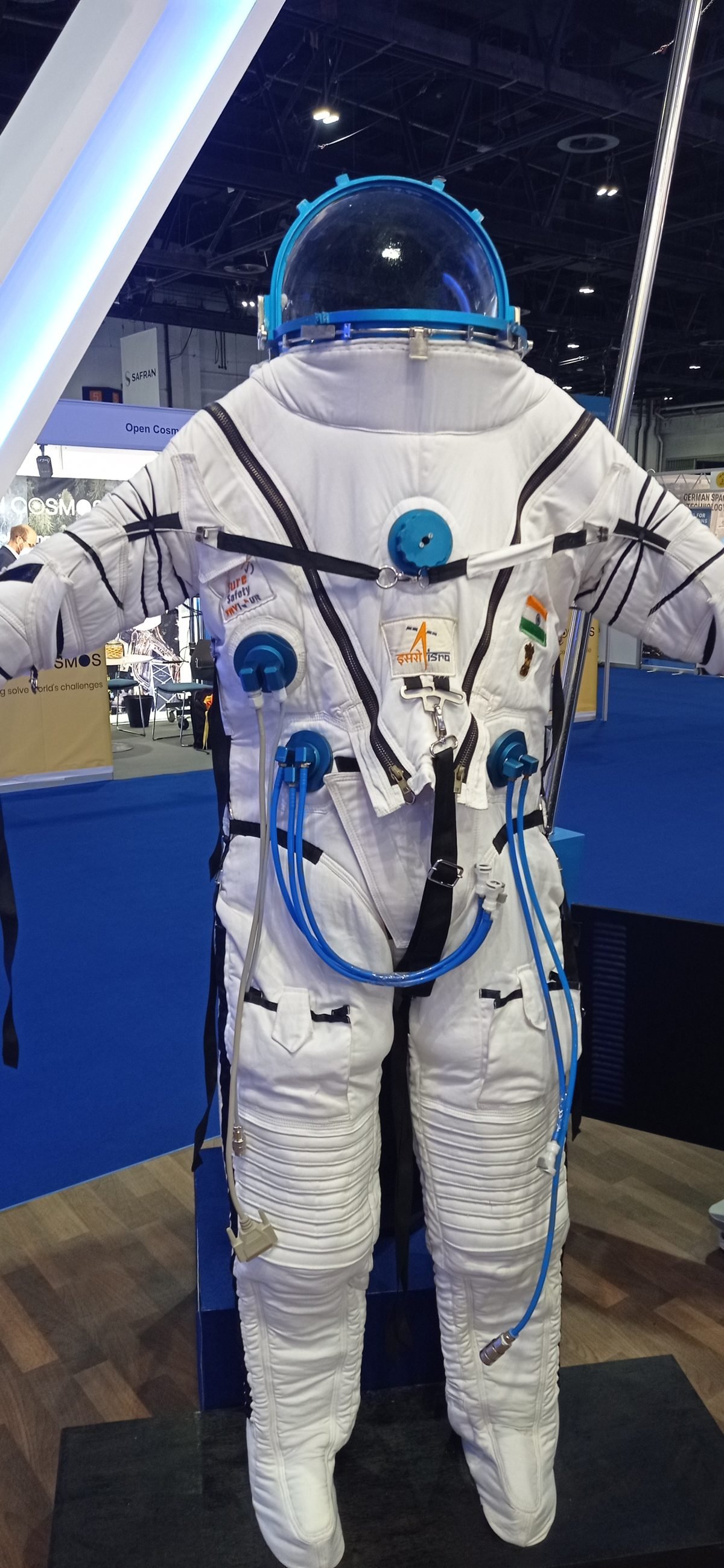
ISRO chief Dr. V. Narayanan has confirmed that the first uncrewed test flight (G1) of India's human spaceflight programme 'Gaganyaan' is slated for the first week of December 2026. The mission will carry the half-humanoid robot 'Vyommitra'.
Bengaluru, June 8. India is preparing to take a major step towards its ambitious human spaceflight programme, 'Gaganyaan'. Dr. V. Narayanan, the Chairman of the Indian Space Research Organisation (ISRO), has confirmed that the first uncrewed test flight of the programme—designated 'G1' (Gaganyaan-1)—will be launched in the first week of December 2026. The flight will prove to be a decisive milestone on the road to India's first indigenous human space mission.
What the Gaganyaan Mission Is
Gaganyaan is India's first human spaceflight programme, aimed at sending Indian astronauts (Gaganauts) into low Earth orbit and bringing them safely back. Ahead of this historic achievement, ISRO will conduct several uncrewed test flights to thoroughly check all of the spacecraft's systems—particularly life support, environmental control and safe re-entry. G1 is the first link in this chain.
'Vyommitra' Will Travel to Space
The most fascinating aspect of this first test flight is that it will carry not a human astronaut but a half-humanoid female robot, 'Vyommitra'. The robot will simulate the conditions of an astronaut and gather critical data on life-support and environmental systems. 'Vyommitra' is capable of testing the effect of the spacecraft on parameters such as human body temperature and heart rate, allowing all risks to be assessed before an actual crewed flight.
A Phased Test Programme
ISRO has planned to advance the Gaganyaan programme in a phased manner. After G1, two further uncrewed test flights—named Gaganyaan-2 and Gaganyaan-3—are also planned, targeted for 2026 and beyond. Each test flight is designed to progressively prove the reliability and safety of the spacecraft. Only after the success of all these flights will ISRO move towards the actual crewed flight, in which Indian astronauts will travel to space aboard an indigenous spacecraft for the first time.
Technical Preparations and Tests
To ensure the success of this mission, ISRO has carried out several important tests over the past few years. These include trials of the crew escape system (the emergency-exit mechanism), checks of the spacecraft's parachute system and rigorous engine testing. The crew escape system is especially important, as it must be able to safely separate and rescue the astronauts from the spacecraft in an emergency. ISRO has repeatedly tested all these systems in an effort to ensure that crewed flight is completely safe.
Training of the Gaganauts
Four Indian Air Force pilots have been selected as astronauts (Gaganauts) for the Gaganyaan mission and are being put through rigorous training. Some of them have also trained at Russia's famed Gagarin Cosmonaut Training Centre. These astronauts are being trained to work in conditions of weightlessness (microgravity), to handle emergencies, to operate the spacecraft's systems and to adapt themselves to a physically and mentally demanding environment. A dedicated astronaut training facility has also been set up in Bengaluru. Notably, in 2025 the Indian astronaut Shubhanshu Shukla became the first Indian to travel to the International Space Station (ISS), giving India's human spaceflight programme invaluable experience and confidence. This training of the Gaganauts is the cornerstone of Gaganyaan's success, as human skill and preparation play a decisive role in the demanding journey of space.
Self-Reliance and Future Plans
Gaganyaan is not just a single mission but the foundation of India's long-term space ambitions. ISRO has announced that it will set up its own space station—the 'Bharatiya Antariksh Station' (BAS)—by 2035, and has set a target of landing an Indian astronaut on the Moon by 2040. The technology and experience gained from Gaganyaan will serve as the basis for these future projects. Moreover, the human spaceflight programme boosts science, technology and innovation in the country, creates thousands of high-skill jobs and also encourages the private space industry of space start-ups. The programme is a symbol of India's spirit of self-reliance, where, on the strength of indigenous technology, the country is preparing to grapple with the most complex challenges of space.
Historic Significance for India
The Gaganyaan programme is not merely a technological achievement for India but a matter of national pride. On success, India will become the fourth nation—after the United States, Russia and China—to send humans into space using indigenous capability. This achievement will be a powerful testament to India's growing space programme and its drive for self-reliance. After the successful landing of Chandrayaan-3 on the south pole of the Moon and the Aditya-L1 solar mission, Gaganyaan is set to add another golden chapter to ISRO's list of accomplishments.
The Road Ahead
The whole nation's attention will be fixed on the G1 flight in December 2026. Its success will pave the way for the subsequent uncrewed flights and, ultimately, the actual crewed mission. ISRO scientists are working day and night to achieve this historic goal. If all goes according to plan, India will, in the coming years, be able to realise its dream of sending its own astronauts into orbit aboard its own spacecraft. This will be a proud moment not only for Indian science but for the entire country, inspiring future generations towards science and space.