Friday, 10 Jul 2026
Jan Jagran
Breaking
National

Indus Waters Treaty: India Rejects 'Supplemental Award' by 'Illegal Court of Arbitration' as Null and Void

On May 15, 2026, the Court of Arbitration issued a supplemental award on 'maximum pondage', which India promptly rejected. New Delhi reiterated that the court is 'illegally constituted' and that the Indus Waters Treaty remains 'in abeyance'.

अजय राज अजय राज 14 Jun 2026, 09:08 AM 1 min read 28 views
Indus Waters Treaty: India Rejects 'Supplemental Award' by 'Illegal Court of Arbitration' as Null and Void
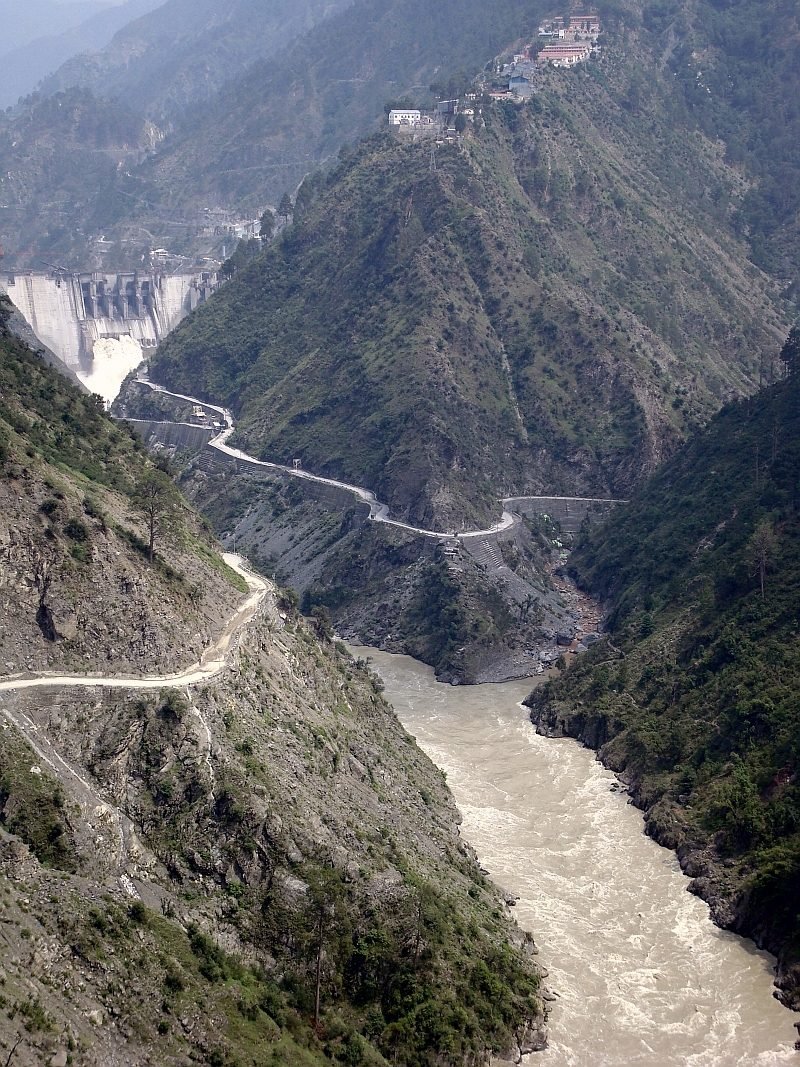
The Baglihar Dam on the Chenab river—an example of India's hydroelectric projects on the western rivers under the Indus Waters Treaty.

New Delhi, May 16. The long-running dispute between India and Pakistan over the Indus Waters Treaty has once again come into the spotlight. On May 15, 2026, a Court of Arbitration constituted under the Permanent Court of Arbitration (PCA) in The Hague issued a supplemental award on the technical issue of 'maximum pondage'. India promptly and firmly rejected the award, terming it 'null and void'.

What the Dispute Is About

The dispute concerns the design of the Kishenganga and Ratle hydroelectric projects on the Chenab river system in Jammu and Kashmir. 'Pondage' refers to the amount of water that may be stored for run-of-river hydroelectric projects. Pakistan claims that the design of these Indian projects violates the provisions of the treaty, while India maintains that its projects are fully in line with it. The treaty grants India limited rights of use over the western rivers—the Indus, the Jhelum and the Chenab.

India's Firm Position

The Ministry of External Affairs (MEA) clarified that the award on maximum pondage handed down by the 'illegally constituted Court of Arbitration' on May 15, 2026 was supplemental to an earlier award on issues of general interpretation of the treaty. Rejecting the award, India reiterated that the court is illegally constituted and that none of its decisions has any legal basis. India also made clear that the Indus Waters Treaty currently remains in a state of 'abeyance'.

The Backdrop of Abeyance

This development comes against the backdrop of the broader tensions that arose after the terror attack on civilians at Pahalgam in Jammu and Kashmir in April 2025. Following that attack, India took the historic decision, for the first time, to hold the Indus Waters Treaty in abeyance—the first occasion on which bilateral tensions had disrupted this six-decade-old treaty. Since then, friction over water-sharing between the two countries has steadily escalated.

Pakistan's Claim

Pakistan, for its part, welcomed the May 15 award. Islamabad said the court had 'affirmed Pakistan's central position' in the disputes over the design of the Ratle and Kishenganga projects—that the treaty places substantive limits on India's water-control capability on the western rivers. In January 2026, Pakistan organised an 'Arria Formula' meeting at the United Nations, in which its envoy described India's position as a 'serious violation of international legal obligations'. In late April 2026, Pakistan's foreign minister warned of grave consequences for the 240 million people who depend on the Indus system.

The Technical and Legal Knot

At the heart of the disagreement lies the very validity of the arbitration process. India has consistently argued that the treaty provides a graded mechanism for resolving disputes, and that running parallel proceedings before both a 'neutral expert' and a 'Court of Arbitration' at the same time is legally untenable. On this basis, India has declined to participate in the arbitration proceedings and has refused to recognise its awards. This technical knot makes the dispute all the more complex.

The History and Importance of the Treaty

The Indus Waters Treaty was signed in 1960 by India's then Prime Minister Jawaharlal Nehru and Pakistan's President Ayub Khan, brokered by the World Bank. Under the treaty, the waters of the three eastern rivers—the Ravi, the Beas and the Sutlej—were allocated to India, while most of the waters of the three western rivers—the Indus, the Jhelum and the Chenab—went to Pakistan. The treaty endured for decades despite several wars and tensions between the two countries, and was regarded as one of the most successful water-sharing treaties in the world. Over time, however, India's growing water needs, climate change and dwindling water resources have raised questions about the relevance of this old treaty. Experts point out that India was not even able to fully use its share of the western rivers' waters, much of which flowed across into Pakistan. This is why India seeks to ensure maximum use of its legitimate share through hydroelectric projects such as Kishenganga and Ratle, which are important for the development and energy needs of Jammu and Kashmir.

What's Next

Experts believe water disputes are becoming an increasingly sensitive aspect of South Asian geopolitics. Amid climate change, dwindling water resources and a growing population, tensions over the sharing of rivers are likely to rise. Some experts, however, also suggest that a resumption of dialogue between the two countries could help pave the way to lasting peace. For now, India is holding firm to its position and is unwilling to accept any award it regards as illegal. In the months ahead, it will be important to watch which direction this diplomatic and legal standoff takes.

Source: The Tribune
अजय राज
Written by
अजय राज
Editor-in-Chief

जनजागरण के संस्थापक और प्रधान संपादक। पत्रकारिता में 15+ वर्षों का अनुभव, राष्ट्रीय और अंतरराष्ट्रीय खबरों पर पैनी नज़र।

View all articles by अजय राज →

Comments (0)

Stay updated with daily headlines

Subscribe to our newsletter and never miss a story.